

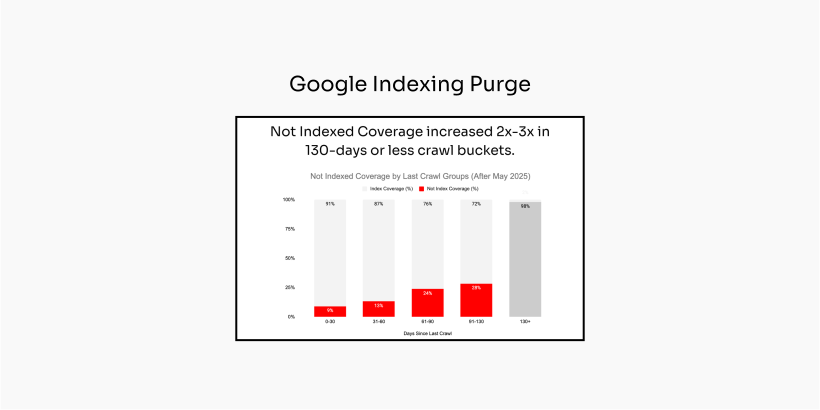
At Indexing Insight, we noticed a HUGE number of pages being actively removed from Google's search results at the end of May 2025.
This indexing purge was so large that it caused many SEO professionals to notice that entire websites were being actively removed from Google's search index.
In May 2025, Google's core update caused a massive number of indexed pages to be actively removed from search results (going from indexed to not indexed).
Indexing Insight detected the scale of indexed pages being removed.
On LinkedIn, we mentioned that we'd seen a huge number of indexed pages being removed by Google. (Source)
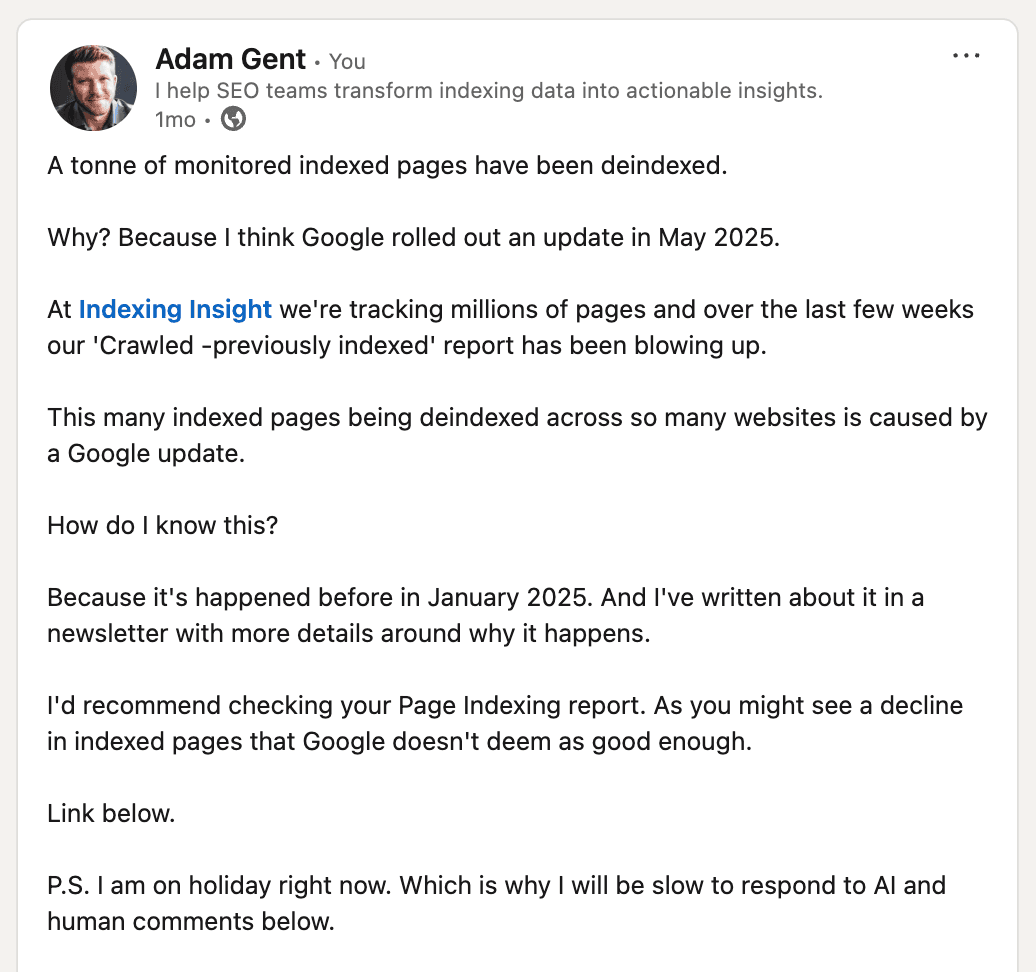
The reaction to the LinkedIn post was massive.
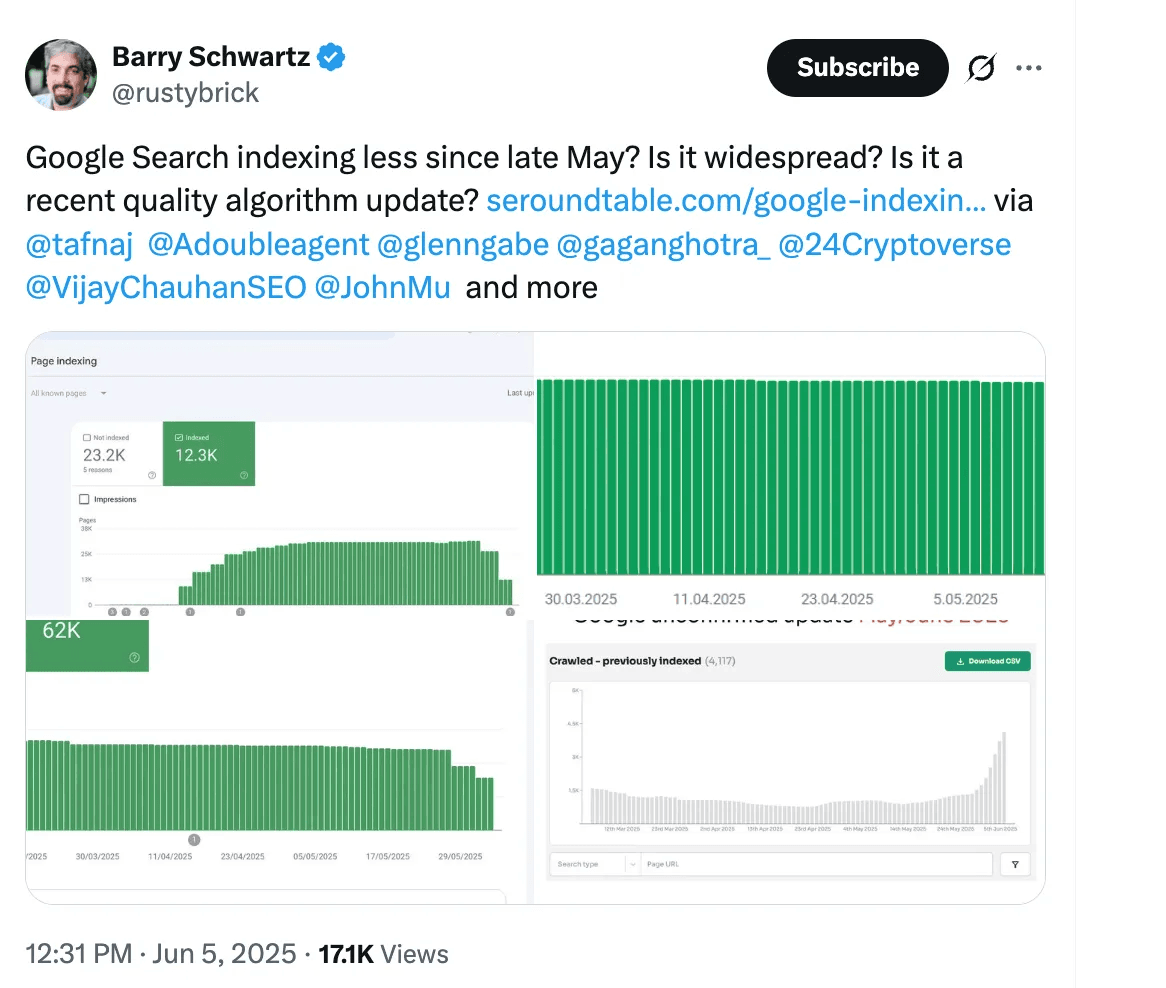
Many SEO professionals reached out to provide screenshots of their Page Indexing report in Google Search Console.
The story, and many of these screenshots, were picked up by Barry Schwartz at SEORoundtable.
At Indexing Insight, we dug into our monitoring data to quantify the impact of the May 2025 Google indexing purge.
These are the highlights:
At the end of May 2025 our tool detected over 25% of the 2 million page URLs we monitor were actively removed from Google's index.
This level of active removal by Google's index is the highest we've ever seen.
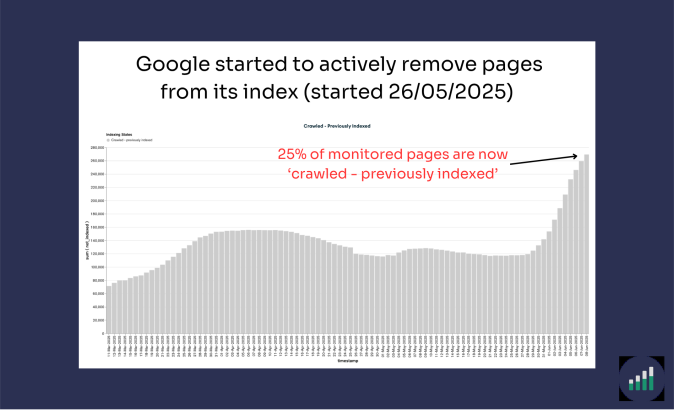
At Indexing Insight, we monitor the active removal of indexed pages and created a new index coverage state called ‘crawled - previously indexed’.
This index coverage state allows us to identify exactly which indexed pages are being actively removed from Google's search results.
Previously, we (and others) have identified the 130-day indexing rule.
The rule is simple: After 130 days of not being crawled a page is actively removed from Google’s search results (going from indexed to not indexed).
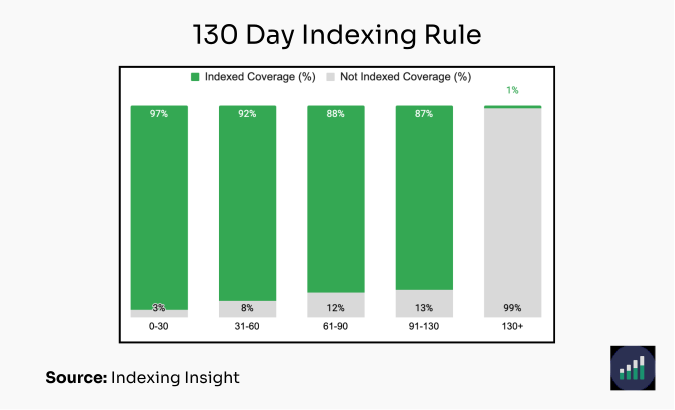
However, starting from May 26th this pattern reversed and it seems Google actively removed pages it had recrawled in 90-130 days.
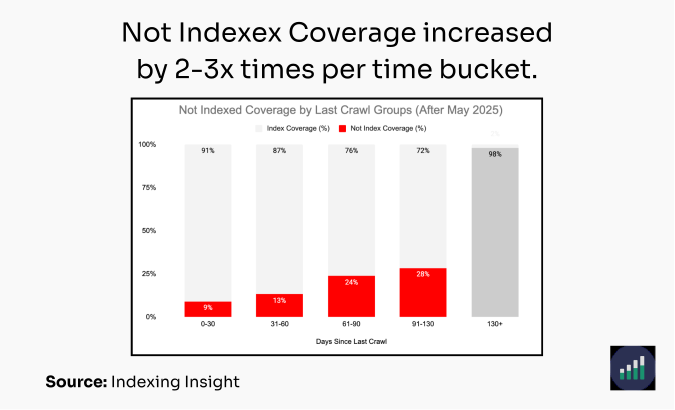
In fact, comparing the days since last crawl time buckets before and after May 25 reveals that Not Indexed pages increased by 50% - 75%.
What does this mean?
It means that Google didn’t wait the usual 130 days since last crawl to collect signals around these pages.
Instead, Google crawled or recrawled pages over the last 3 months and decided not to wait to deindex pages.
The impact of the Google indexing purge seemed to vary across different websites.
During the Google indexing purge we noticed some websites see a 15% of monitored pages moved into the ‘crawled - previously indexed’ report. While others saw 75% of their indexed pages move into the 'crawled - previously indexed' report.
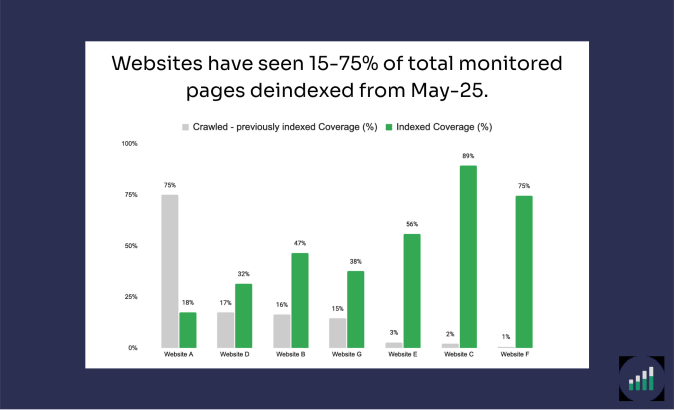
What was interesting about this update was that not all websites saw such a huge spike in indexed pages being actively removed from the index.
Although they saw an increase in ‘crawled - previously indexed’ this was still only 1% - 3% of all monitored pages.
Google is removing pages that lack user engagement.
After analysing Search Analytics data AND reviewing the types of pages being actively removed, the pattern is clear.
Google actively purged a lot of “poor performing” pages from its index in May 2025.
There are two patterns we noticed in performance data for pages actively removed:
When reviewing pages with available Search Analytics data, we noticed the same pattern: pages actively deindexed by Google had low or zero SEO performance.
Let me show you some examples.
When checking the SEO performance of pages for atmlocation(.)pro you can see that the page did appear in Google Search. But barely had any clicks or impressions over the last 12 months.
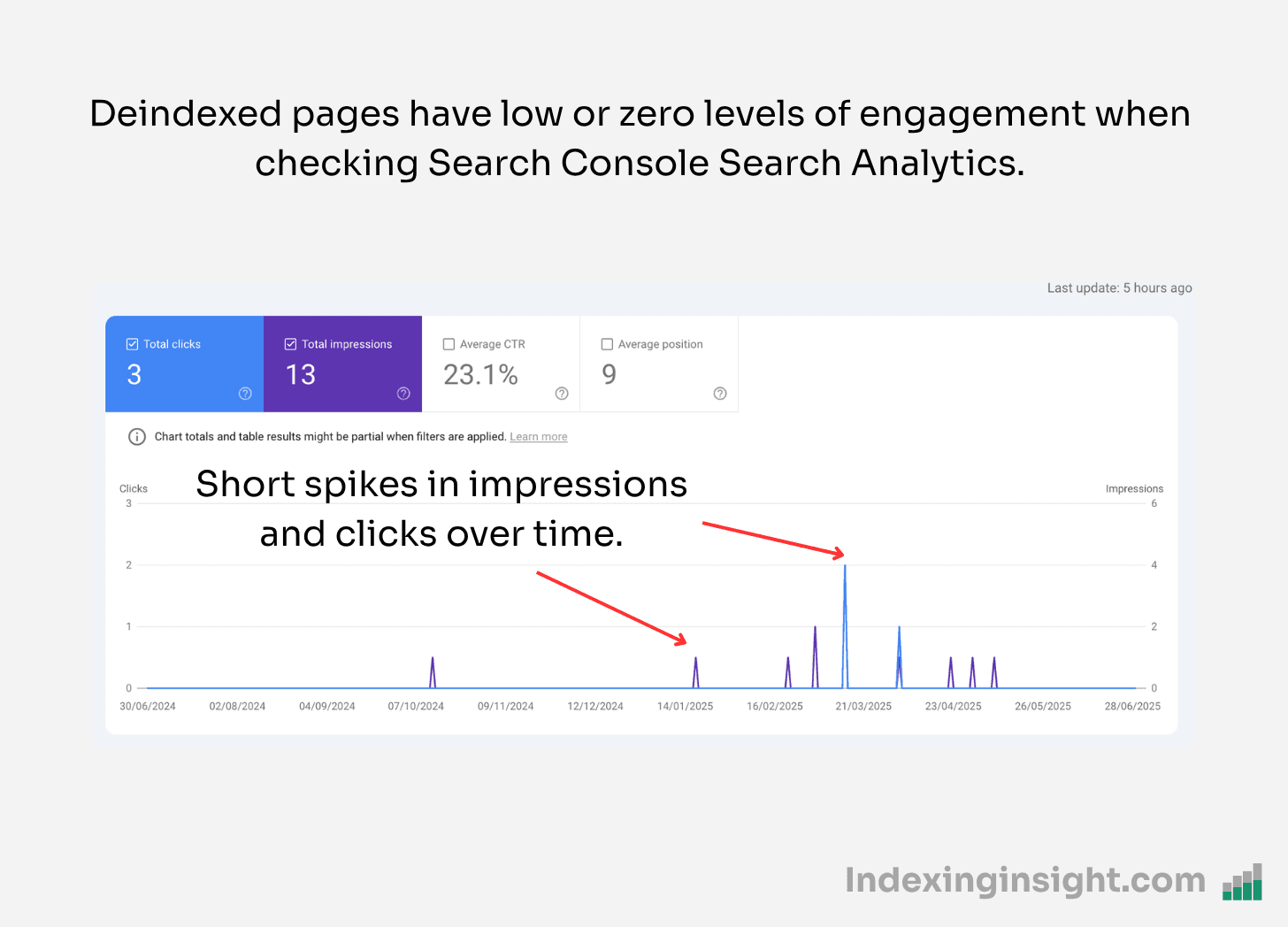
For another publishing website, you can see that the page had a large spike in engagement and then nothing.
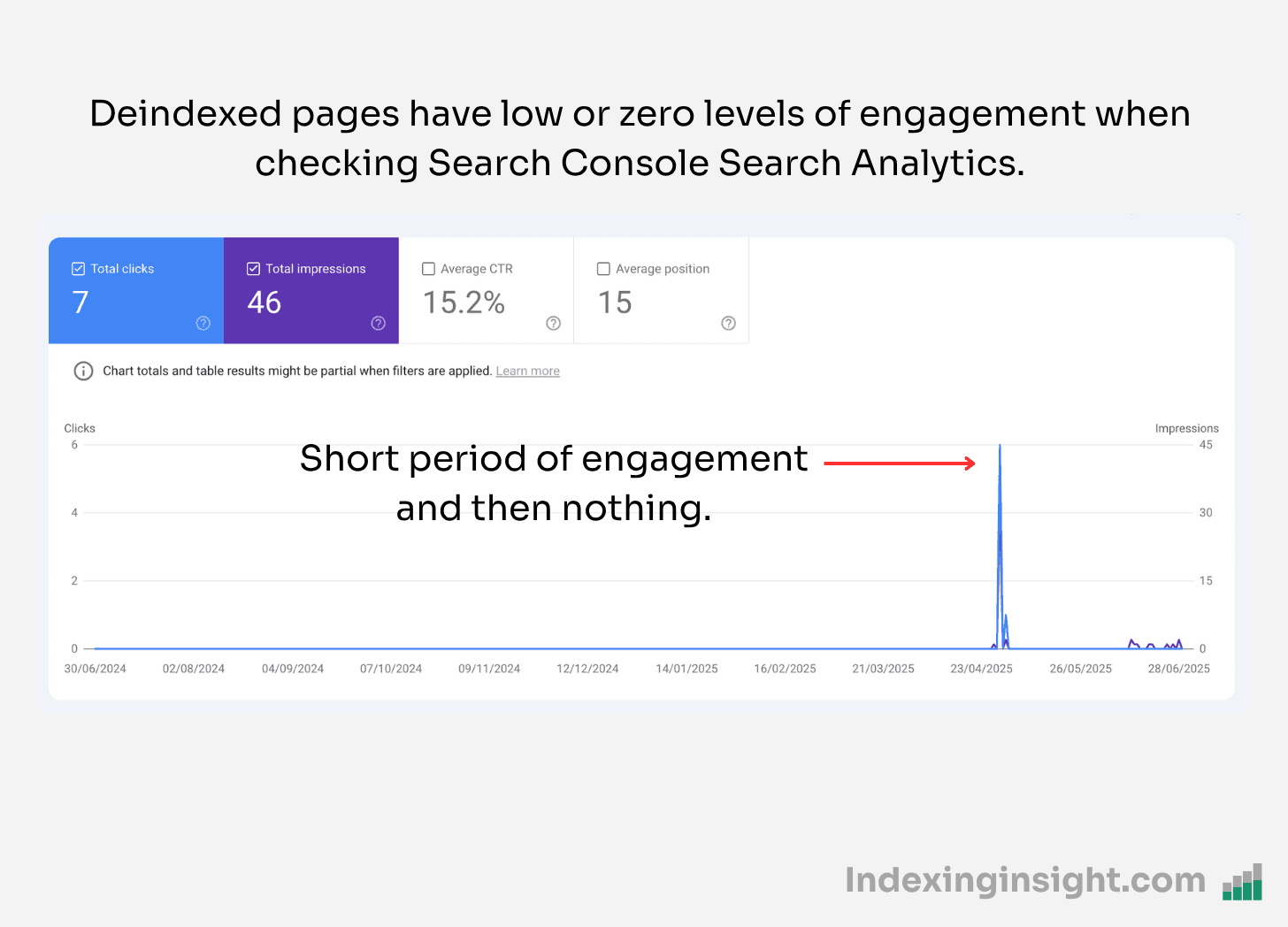
Finally, blog articles from a website with a lack of SEO performance (clicks and impressions) were actively deindexed by Google.
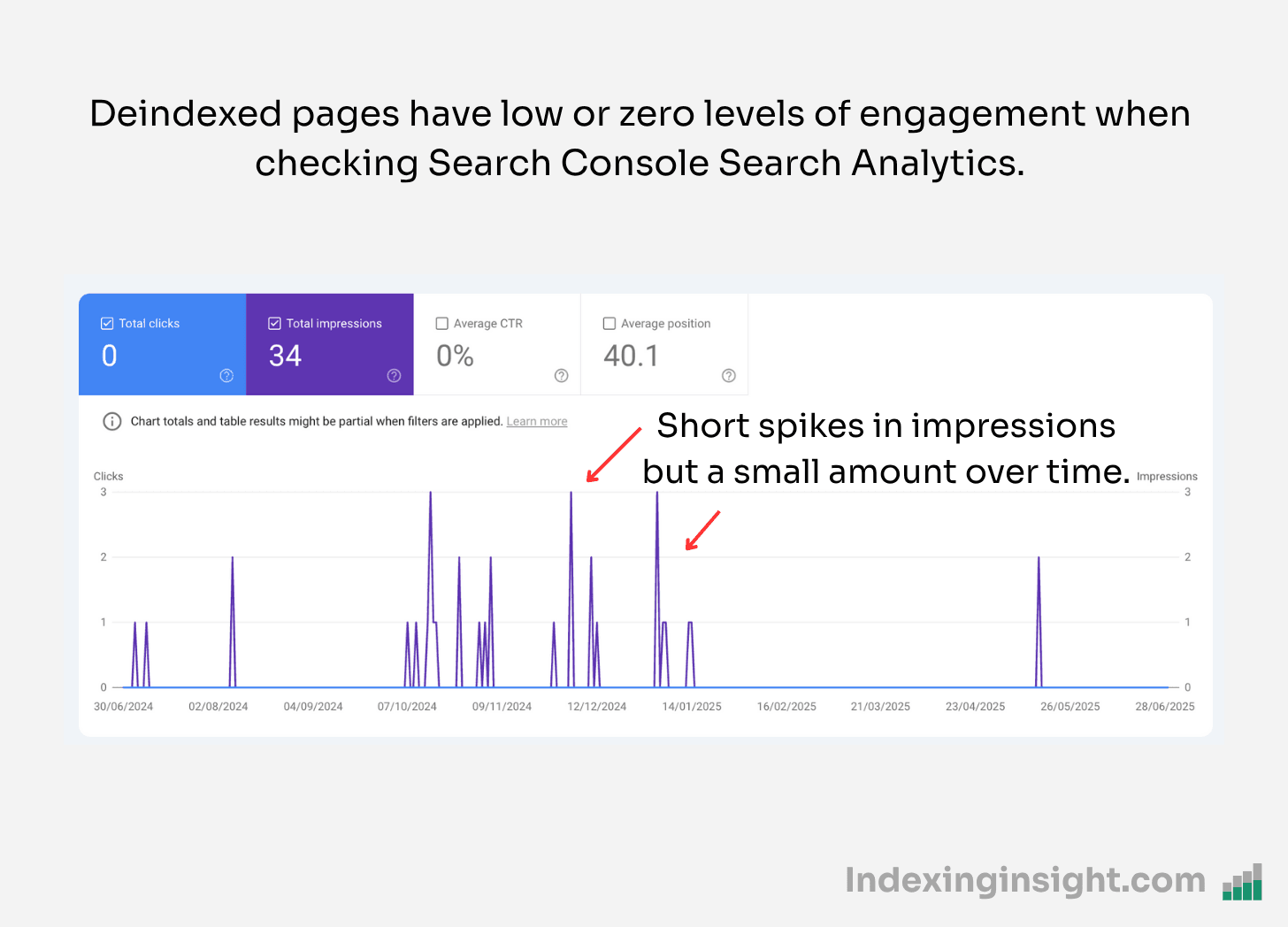
The same pattern is seen over and over again when reviewing pages that were actively deindexed in Google’s Search index.
Pages that had poor performance in Googe Search were actively purged.
The indexing purge had zero impact on the SEO performance of websites.
As you can see from the screenshot below, the removal of indexed pages has had zero impact on SEO clicks or impressions after late May-25 or early June-25.
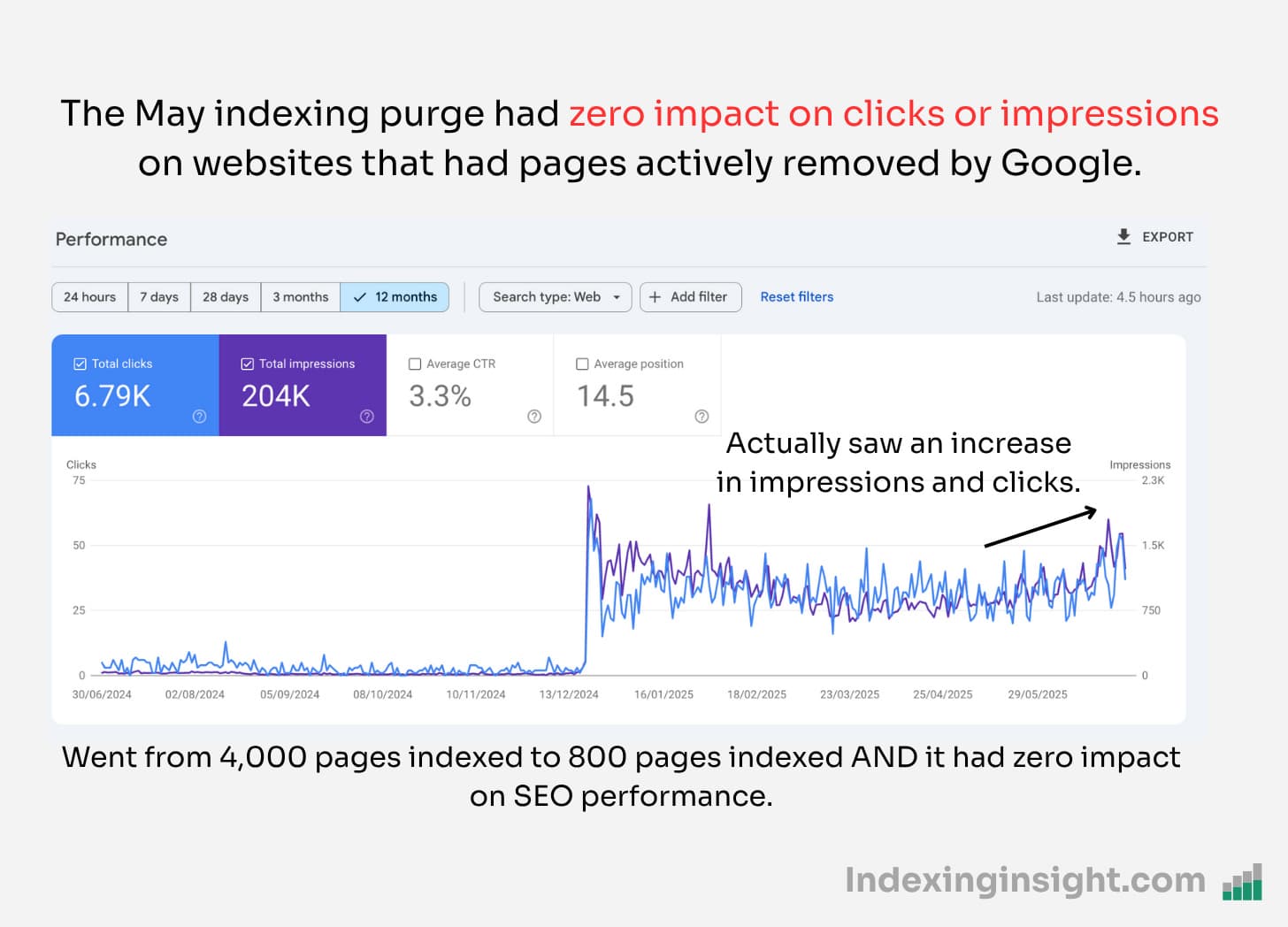
This didn’t just happen to 1 website but other websites we had access to saw either no decline or a positive trend in clicks and impressions.
The screenshot below is of a website that had 75% of its important pages actively removed by Google’ Search index. However, it still saw a positive improvement in clicks and impressions during the June core update.
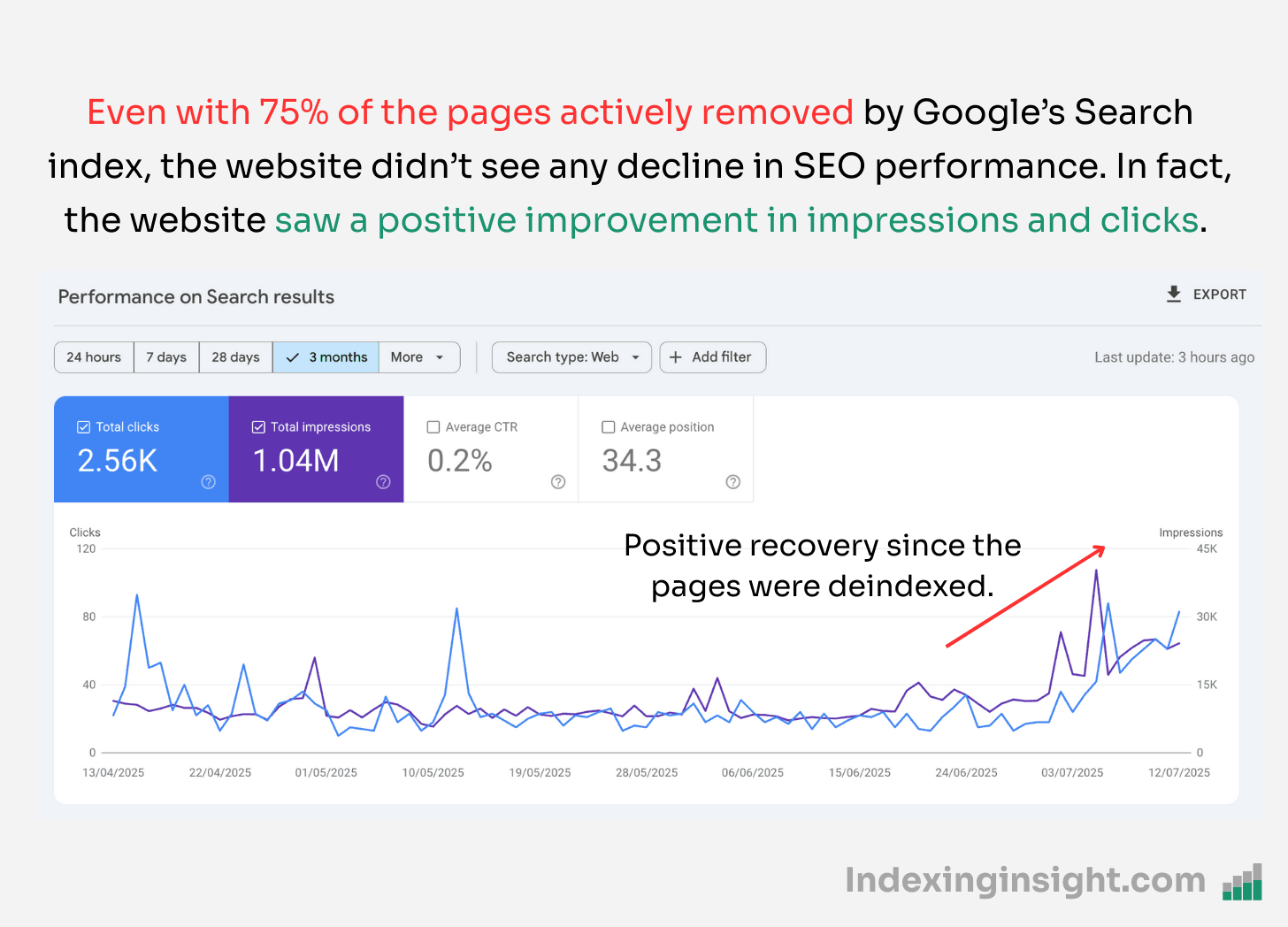
This analysis shows that Google actively removed a TONNE of inactive indexed pages from its search index.
If thousands of pages get actively deindexed and it has zero impact on impressions or clicks…were those pages of use anyway?
The Google Indexing Purge impacted websites at a massive scale.
Google's indexing purge was about removing low-quality pages
Our own customer data showed that 15-75% of indexed pages were actively deindexed by Google. These weren’t just small websites or brands. They were big, medium and small brands.
Why were these pages deindexed at such a large scale?
Based on the available data, the most likely explanation was that Google purged a HUGE number of pages and content that didn’t drive any meaningful engagement (clicks, queries, swipes, impressions, etc.) from its search index.
This lines up with how Google manages its search index.
The problem is that based on the data, Google’s index didn’t wait around the usual 1 - 130 days. Instead, the index seemed to purge content within days of being recrawled.
Here are a few ideas why Google might have broken the 130-day rule:
Whatever the reason, it's clear that Google's Search index is designed to remove massive numbers of low-quality pages from its index.

Adam Gent
SEO Product Manager and Technical SEO. I’m currently an independent consultant who works with organisations to plan, scope and execute SEO projects that drive results.
