
Research by Indexing Insight reveals that index coverage states in Google's Page Indexing report reflect crawl priority within Google's crawling architecture.
In this article, I'll explain how index coverage states indicate crawl priority. And how index states tell us the level of crawl priority in Google’s system by mapping them to Googlebot’s crawl, render and index process.
Let's dive in.
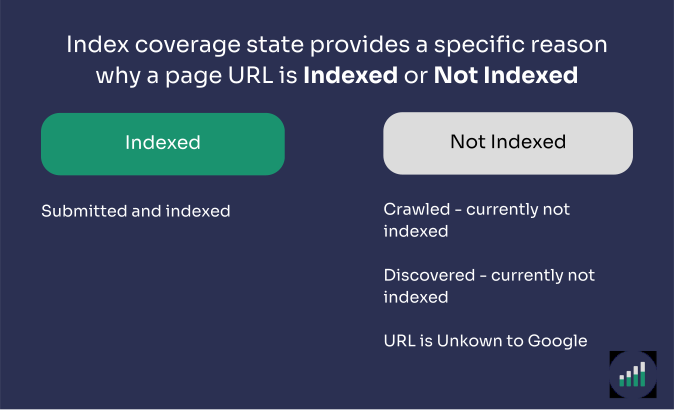
Every page URL has a coverage state in the Page Indexing report.
A page's coverage state indicates the specific reason it's Not Indexed. This information is available through the URL Inspection API, which provides additional details.
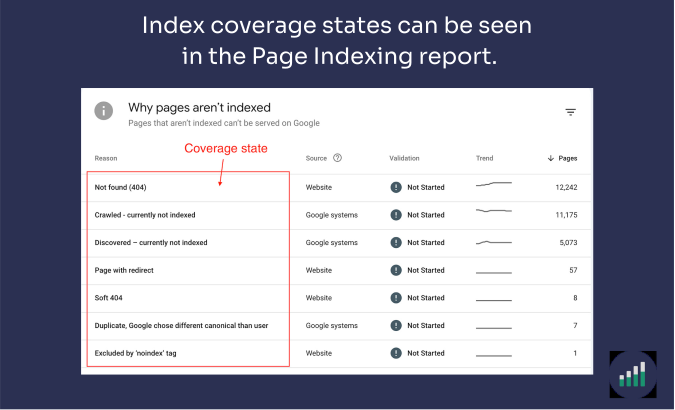
Anyone can view the coverage state of Not Indexed pages in the Page Indexing report in Google Search Console.
Indexing coverage states in Google Search Console indicate crawl priority.
Our 190-Day Indexing Rule research at Indexing Insight has revealed a clear pattern: index coverage states map to Googlebot's crawl priority.
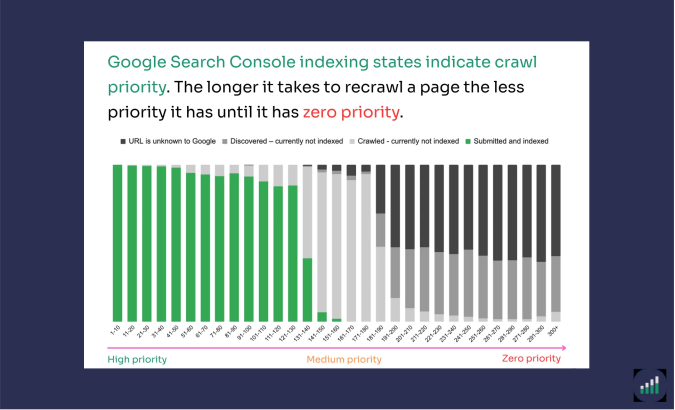
Our resarch identified that if a page is not recrawled in 190-days (6 months), then it is given zero crawl priority by Googlebot.
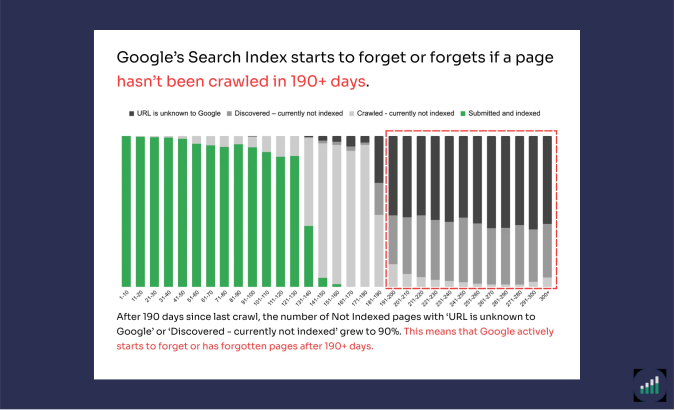
Based on our research, we identified that specific index coverage states can be grouped into different Days Since Last Crawl buckets:
Each index coverage state can be clearly mapped to crawl priority within Google.
The index coverage states can be mapped to Googlebot's crawling architecture.
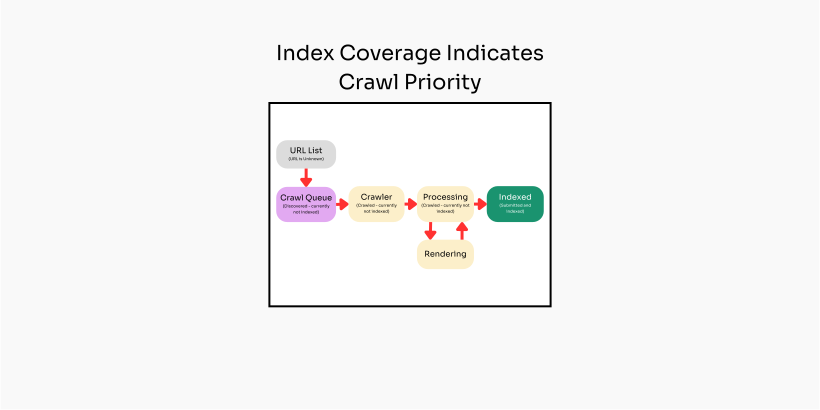
Below is a simple diagram of the crawling and indexing system mapped to the index coverage states.
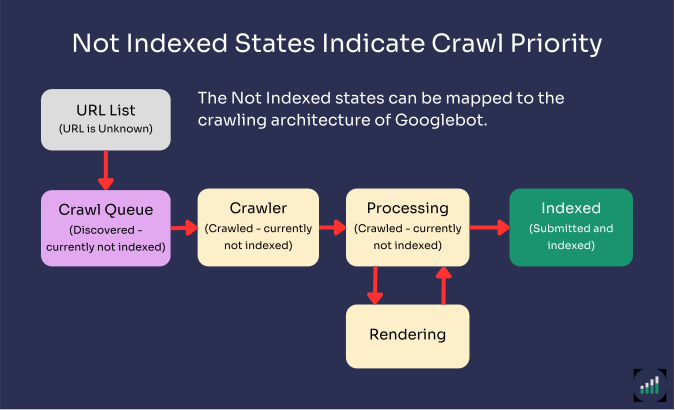
The diagram is based on Martin's confirmation on LinkedIn and the Crawl, Render, and Index diagram from the Understand the JavaScript SEO basics documentation.
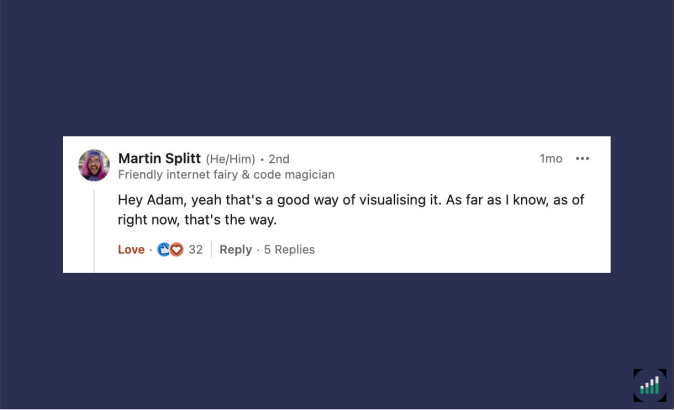
Martin Splitt on Linkedin confirmed the coverage state in Google Search Console could be mapped to the offical diagram in Google Search docs (source).
Gary Illyes also confirmed on LinkedIn that page URLs can move between index states as they collect signals over time. And that when pages move between coverage states it impacts on the crawl priority of the page.
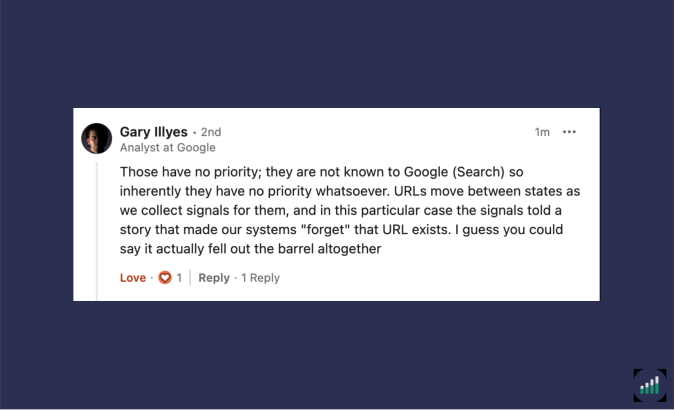
The confirmation from both Martin and Gary was the final piece of the puzzle.
It helps support our research that the index coverage states in Google Search Console are an indiciation of crawl priority.
The coverage states of your pages indicate crawl priority in Googlebot.
In this article, we’ve provided evidence that specific index coverage states in the Page Indexing report are an indication of crawl priority within Google's architecture.
We can also map the index coverage states to Googlebot's architecture.
Google's Martin Splitt and Gary Illyes have confirmed that index coverage states indicate crawl priority. When a page's status changes to "URL is Unknown to Google," it signals the page has zero crawl priority.
Hopefully, this article has inspired you to look at your page indexing report with a new understanding. And identify which pages are less of a priority for Google to crawl and index.

Adam Gent
SEO Product Manager and Technical SEO. I’m currently an independent consultant who works with organisations to plan, scope and execute SEO projects that drive results.
