

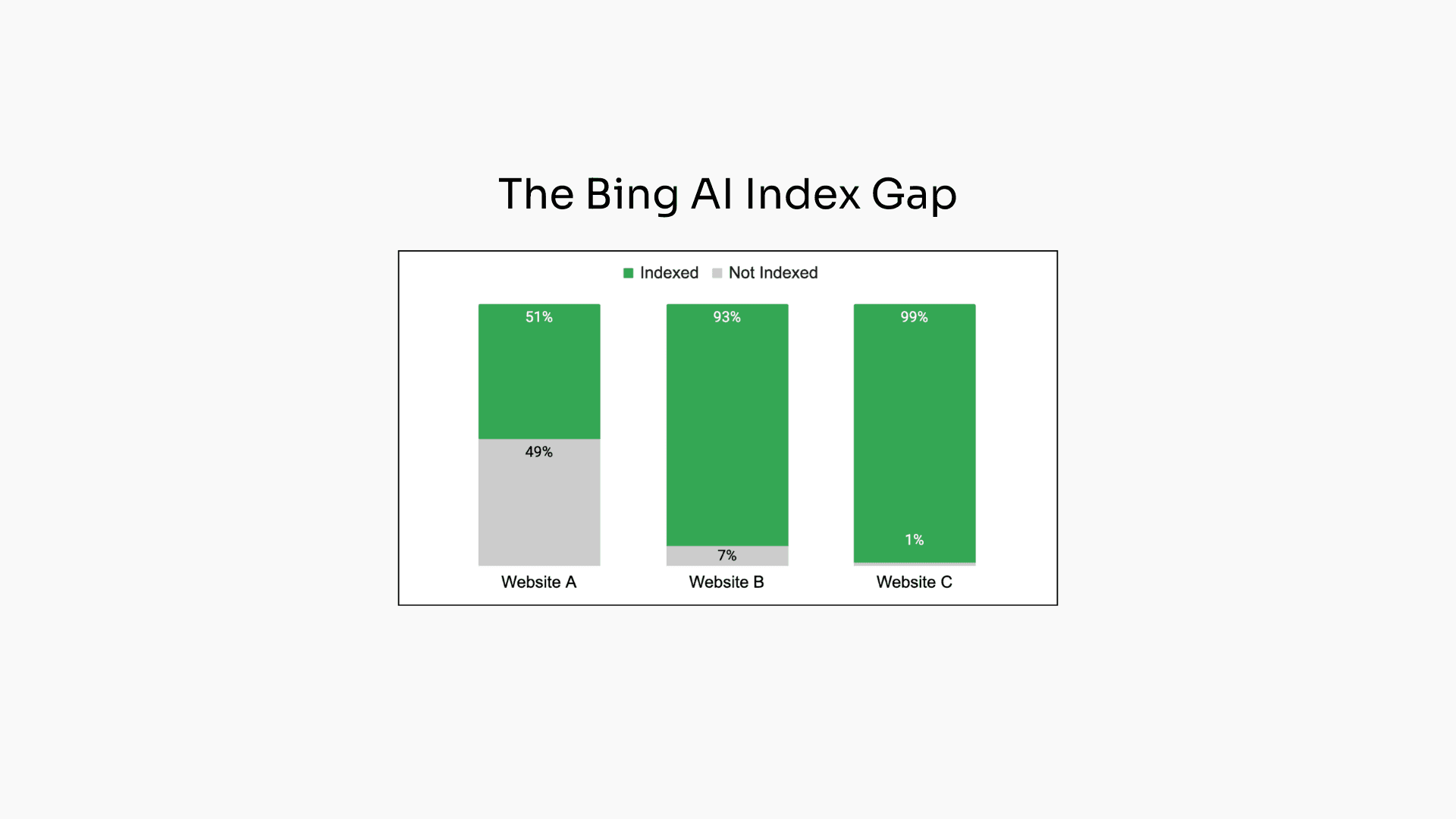
The cited pages in Bing AI Answers, Copilot and partners includes pages actively removed from Google's search results.
At Indexing Insight, we've conducted a small study using the new AI Performance report in Bing Webmaster Tools.
The data is showing a clear pattern: Pages that are Not Indexed in Google are appearing in Bing AI Answers.
In this article, we'll dig into the results from our small study and why pages might appear in Bing but not in Google.
Let's dive in!
Bing Webmaster Tools released a new report: AI Performance.
On February 10th 2025, the Bing Webmaster Tools team released a new report called AI Performance. The report provides a breakdown of how your website appears in Bing Searches' AI Answers, Copilot and other partners.
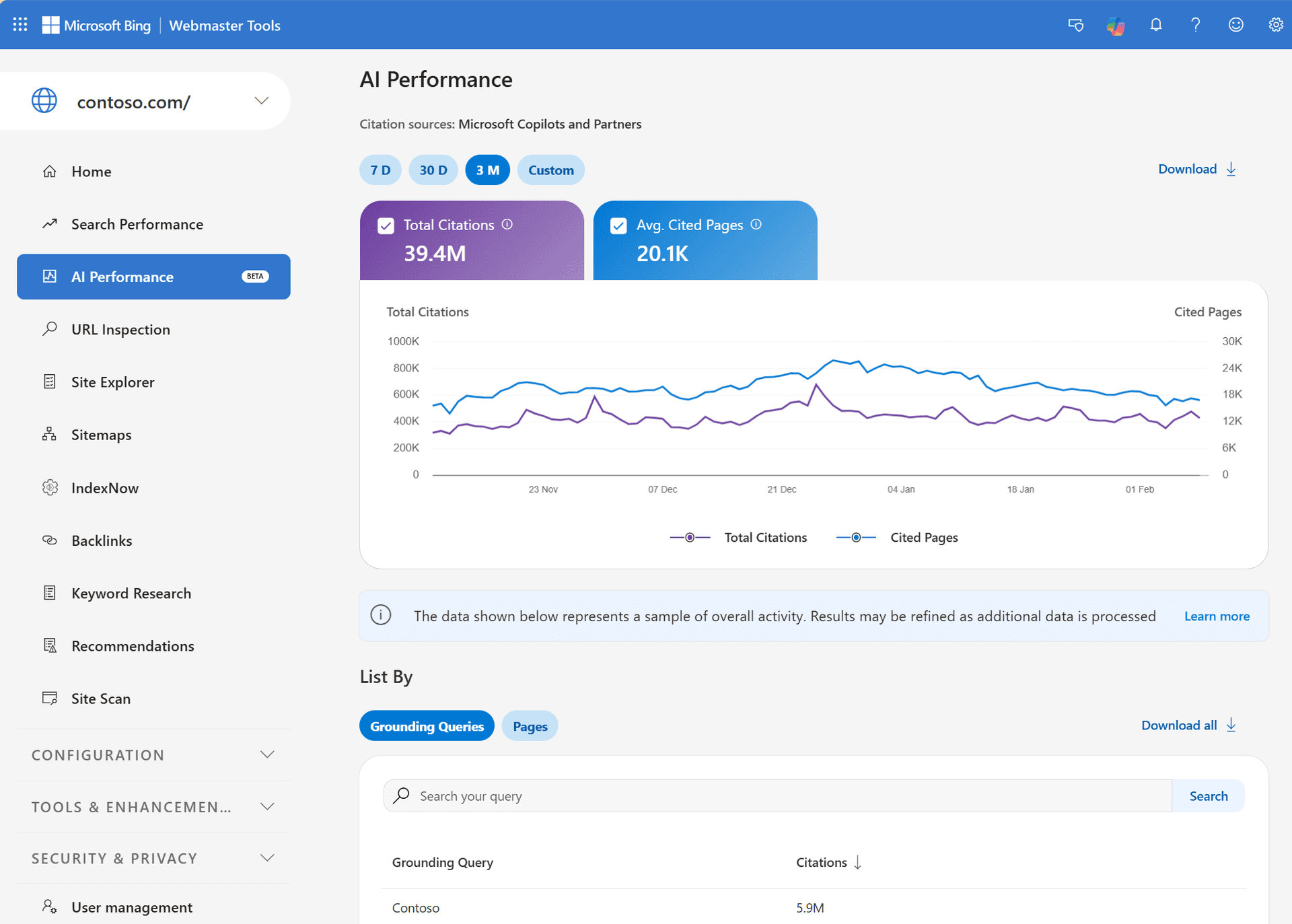
In the report, there are two key parts:
The report provides two key data points in the data table:
The most interesting part of this report (for us) is that you can export cited pages.
Why?
Because you can cross-reference the cited pages with other data sources like Google indexing data. And you can identify very interesting insights from the data.
The indexing data pulled in this study is from Indexing Insight and the Bing AI Performance report.
Here are a few more things to keep in mind when looking at the results:
In our study, we found that Not Indexed pages appear in Bing AI Answers.
When we combined the cited pages in the AI performance report with Google indexing data from the URL inspection API, we discovered an interesting pattern.
The cited pages in Bing AI Answers, Copilot and partners includes Not Indexed pages in Google Search.
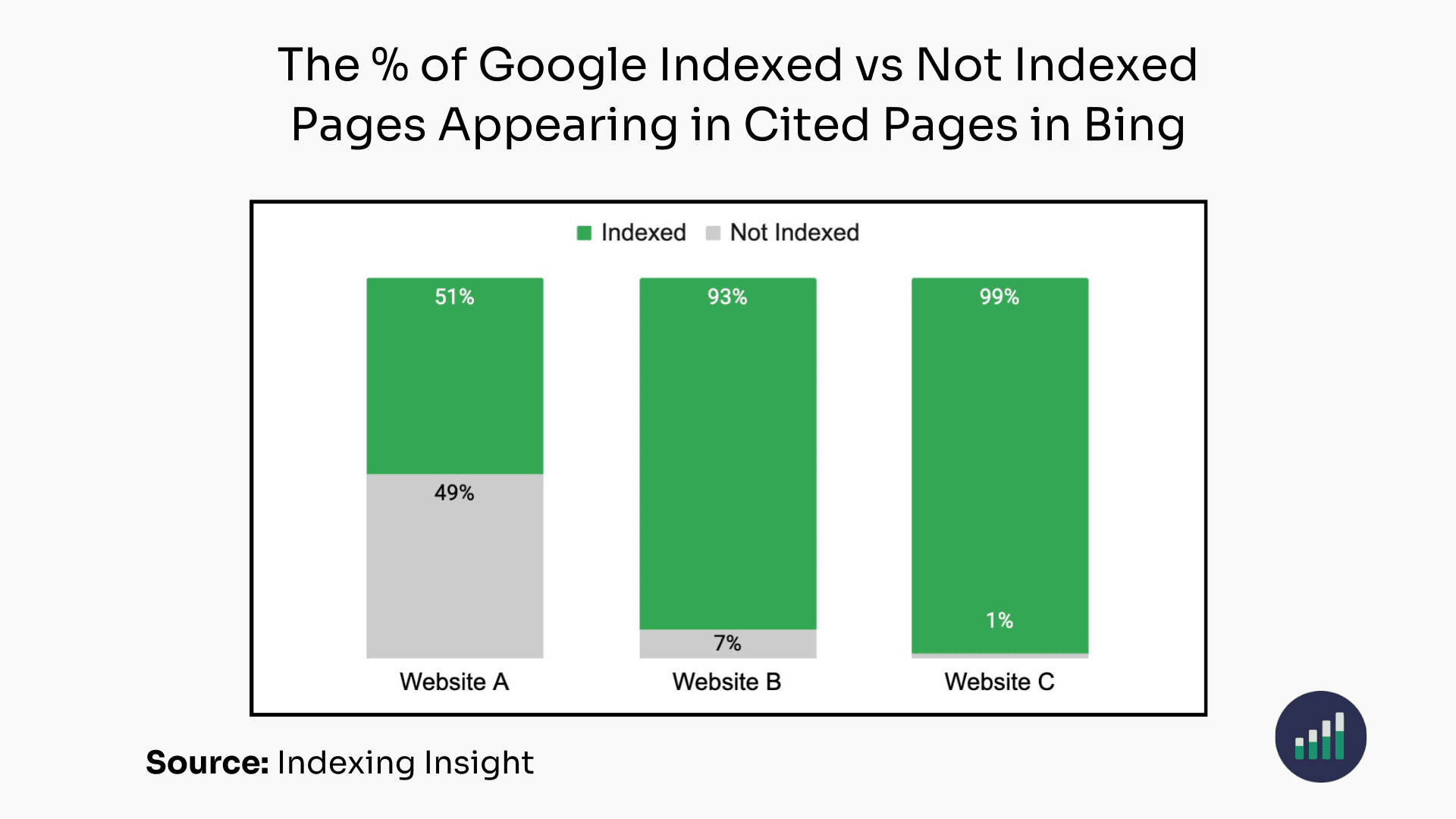
In our study, we noticed the following for each website:
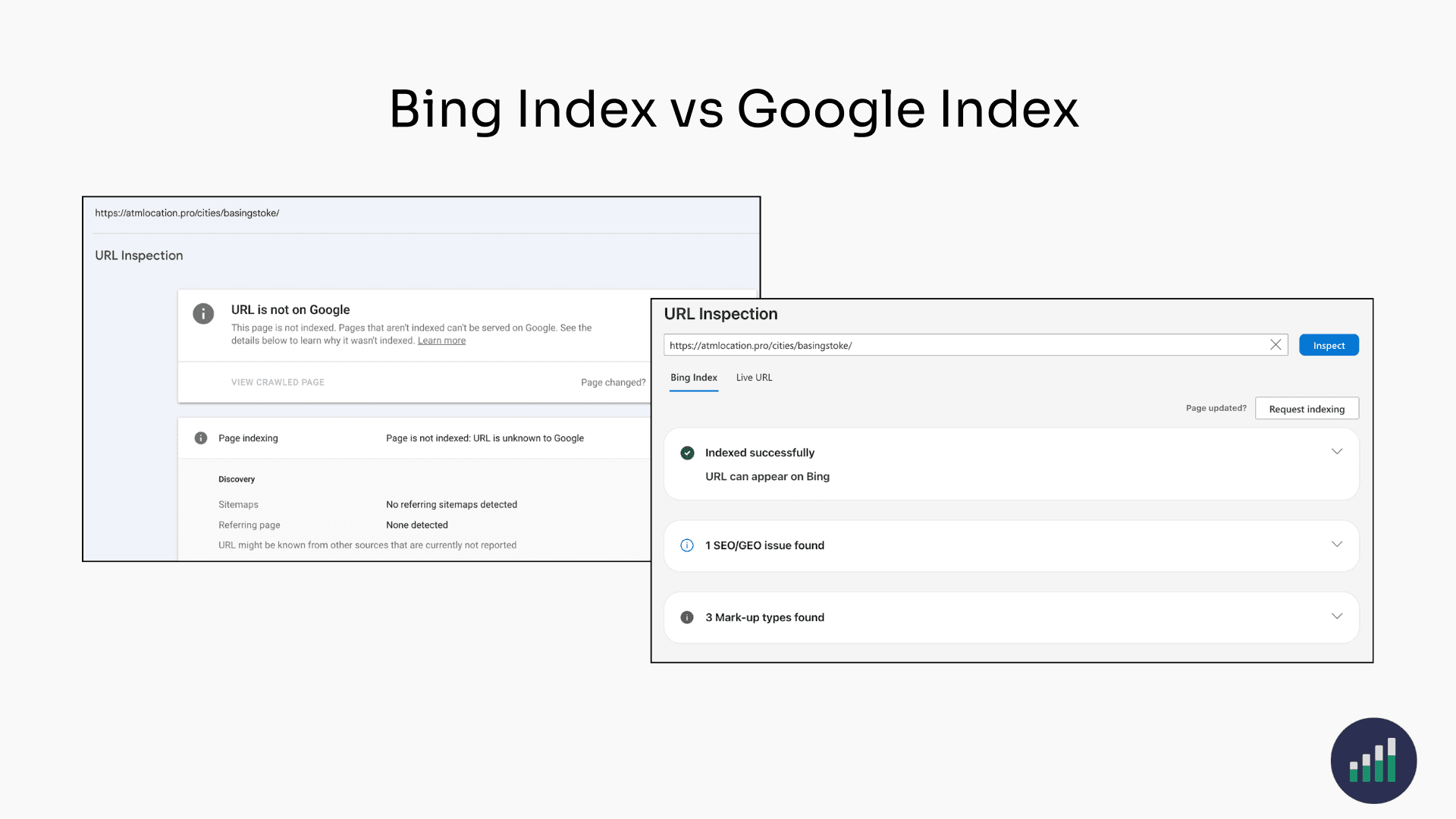
When double-checking page-level indexing status, we used both the Google URL Inspection Tool and the URL Inspection Tool in BWT.
At Indexing Insight, we not only have access to the index state of a page but also why pages are Not Indexed in Google Search.
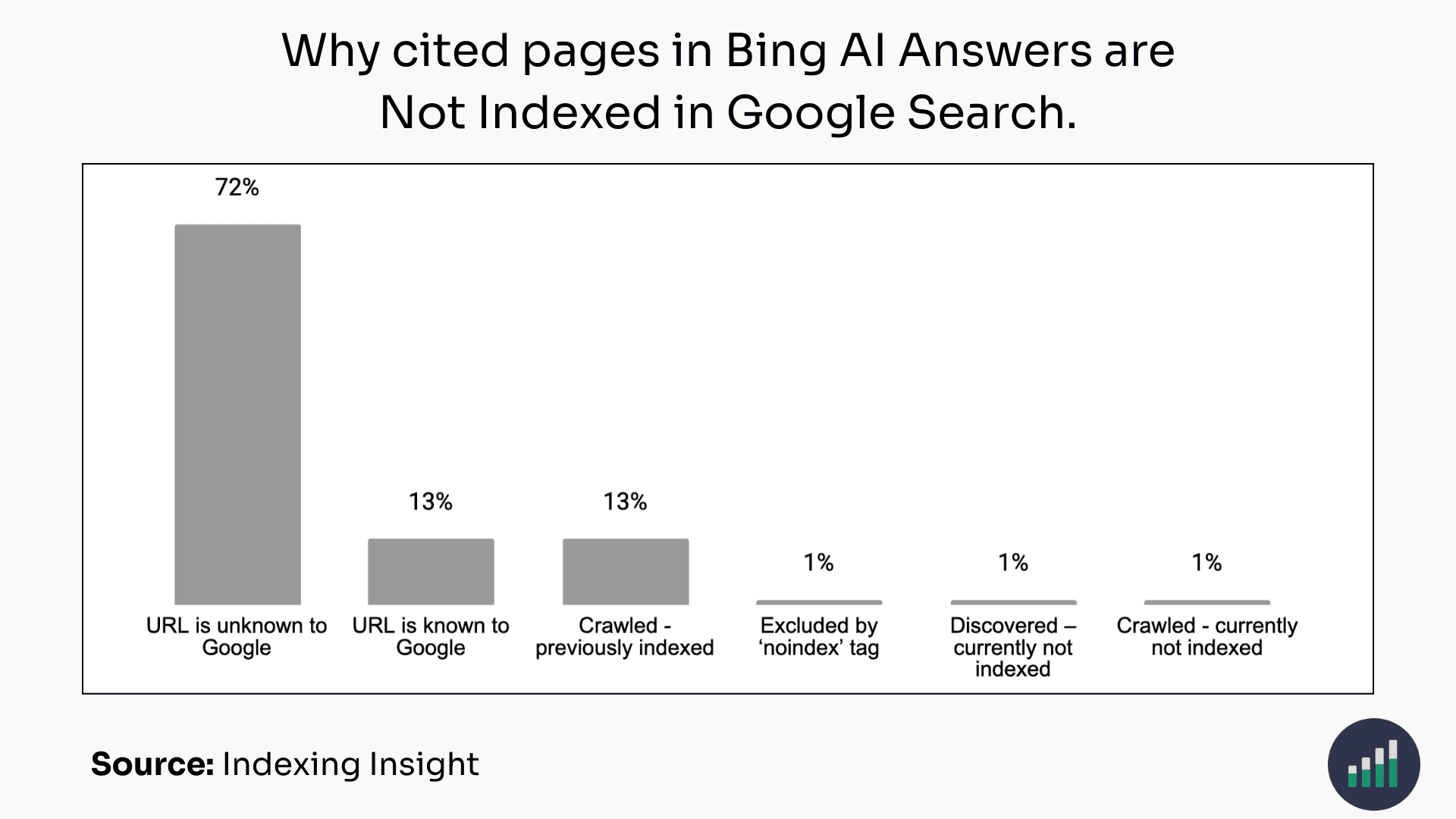
Based on our 3 Types of Not Indexed pages our team spotted a clear trend:
98% of the cited pages in Bing AI Answers are Not Indexed in Google because of page quality issues.
Our extensive research into index coverage states indicate crawl priority has found that that a page's quality score can degrade over time. And as a page's quality score declines the index coverage state can reverse.
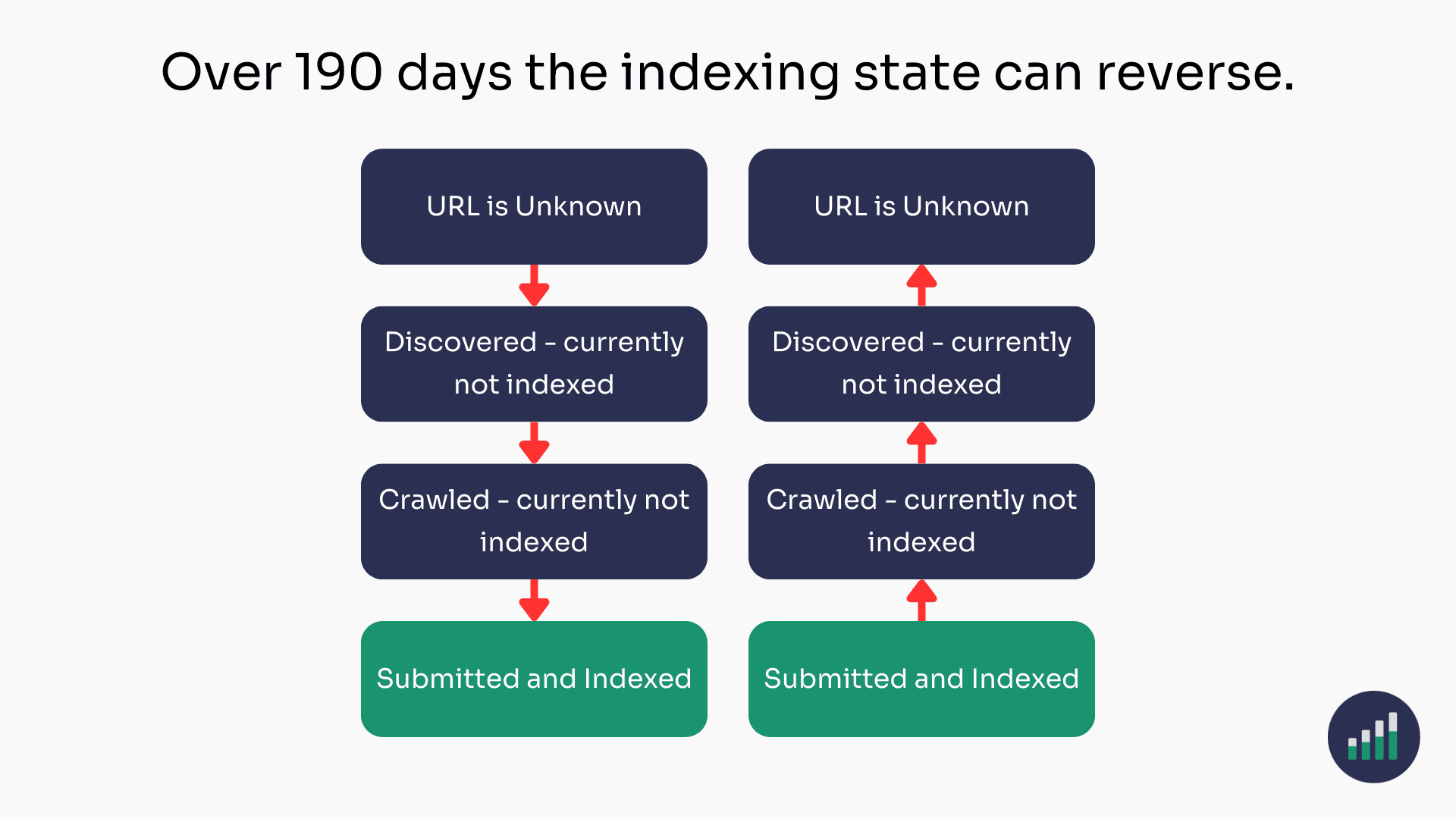
The top 3 Not Indexed coverage states in cited pages in Bing AI Answers, are all states that align with pages that Google has forgotten. And these page URLs have zero crawl priority within Google's crawling architecture.
But why?
Why is Bing AI Answers, Copilot, and partners citing Not Indexed pages that Google is spending almost zero time crawling?
Let's get a better understanding of each index to find out.
The reason why pages are appearing in Bing AI Answers is simple:
Page quality threshold in Bing Search is lower because of lack of user interaction when compared to Google search.
According to a 2024 SparkToro study, Google dominates the search landscape with 14 billion daily searches, dwarfing Bing's comparatively modest 613.5 million.
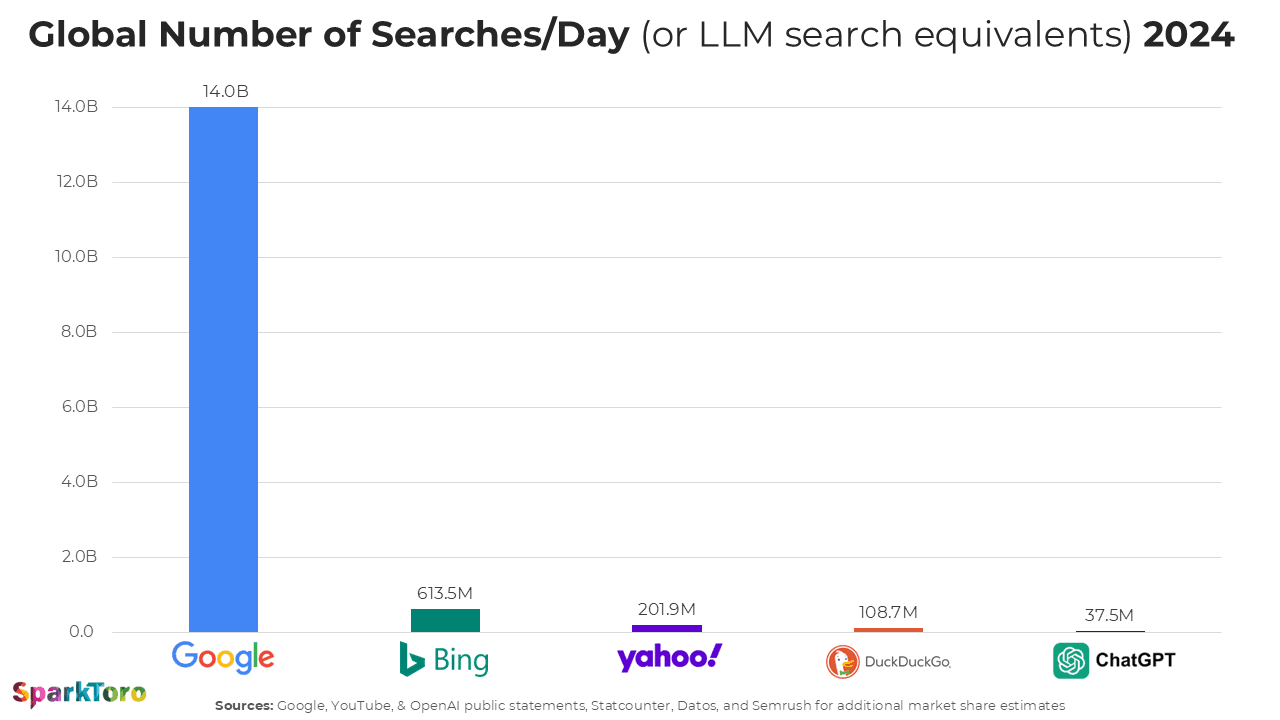
Why does this matter?
Google uses those 14 billion user interactions per day as a continuous feedback loop to refine and improve the quality of its results. Google explained all of this to the Department of Justice in a DOJ trial.
That means it has trillions of examples to help identify low and high-quality pages in its search results. This is the "magic" of Google.
The positive/negative interactions of billions of searches help it improve search quality for future searchers.
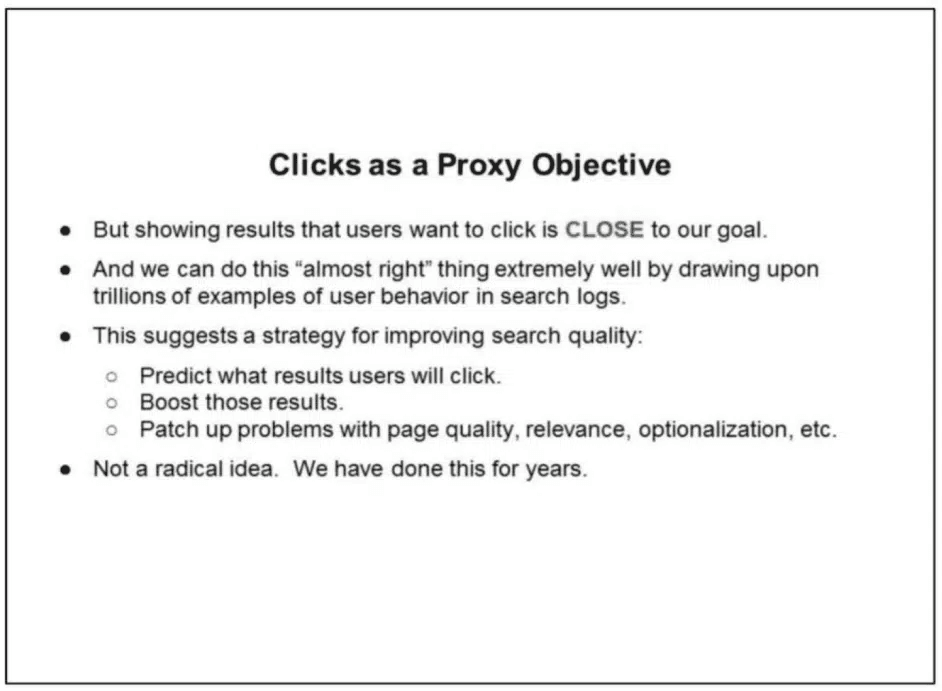
Google's algorithms have a minimal understanding of the content on your website. Instead, they use the billions of examples to help predict which pages/websites appear in Google.
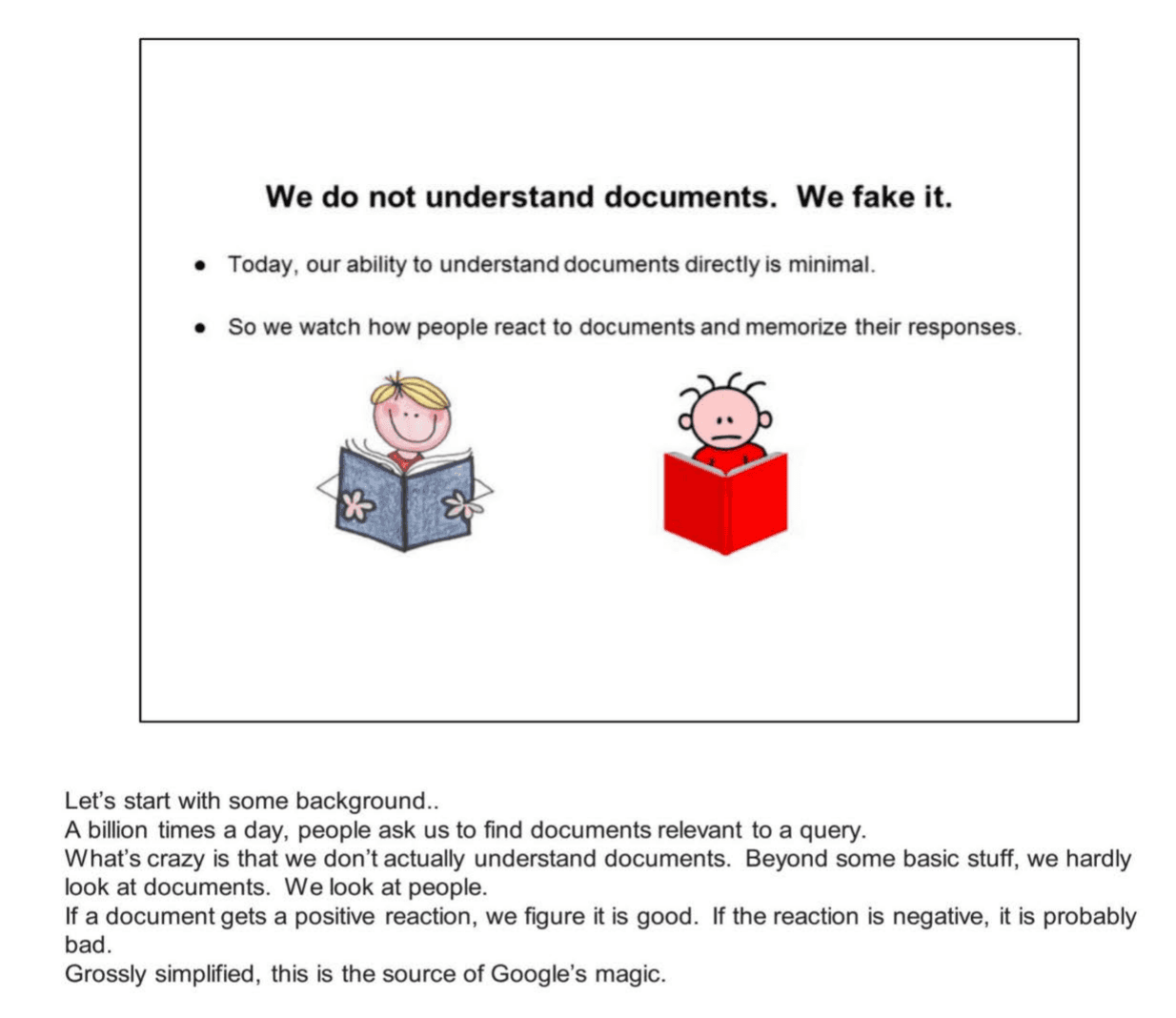
The search logs used by Google aren't just about improving ranking. Google also uses this user data to manage its index.
The DOJ trial documents highlight that user data/search logs (not necessarily clicks) are important in helping Google decide if a page should remain in its index:
While click data is “not particularly important for indexing,” query data is: GSEs need to ensure that their index covers queries that are frequently entered. Id. at 2211:13- 17 (Giannandrea). But see id. at 10274:16-21 (Oard) (opining that click data helps Google “decide whether to keep those pages . . . [or] future pages in the index or not”). Source: Google Search Engine Monopoly Ruling
There is no official documentation on how Google uses data to manage its index.
However, we've done extensive research on how Google manages its index and found that staying about the page quality threshold is a BIG factor in whether a page remains indexed in Google.
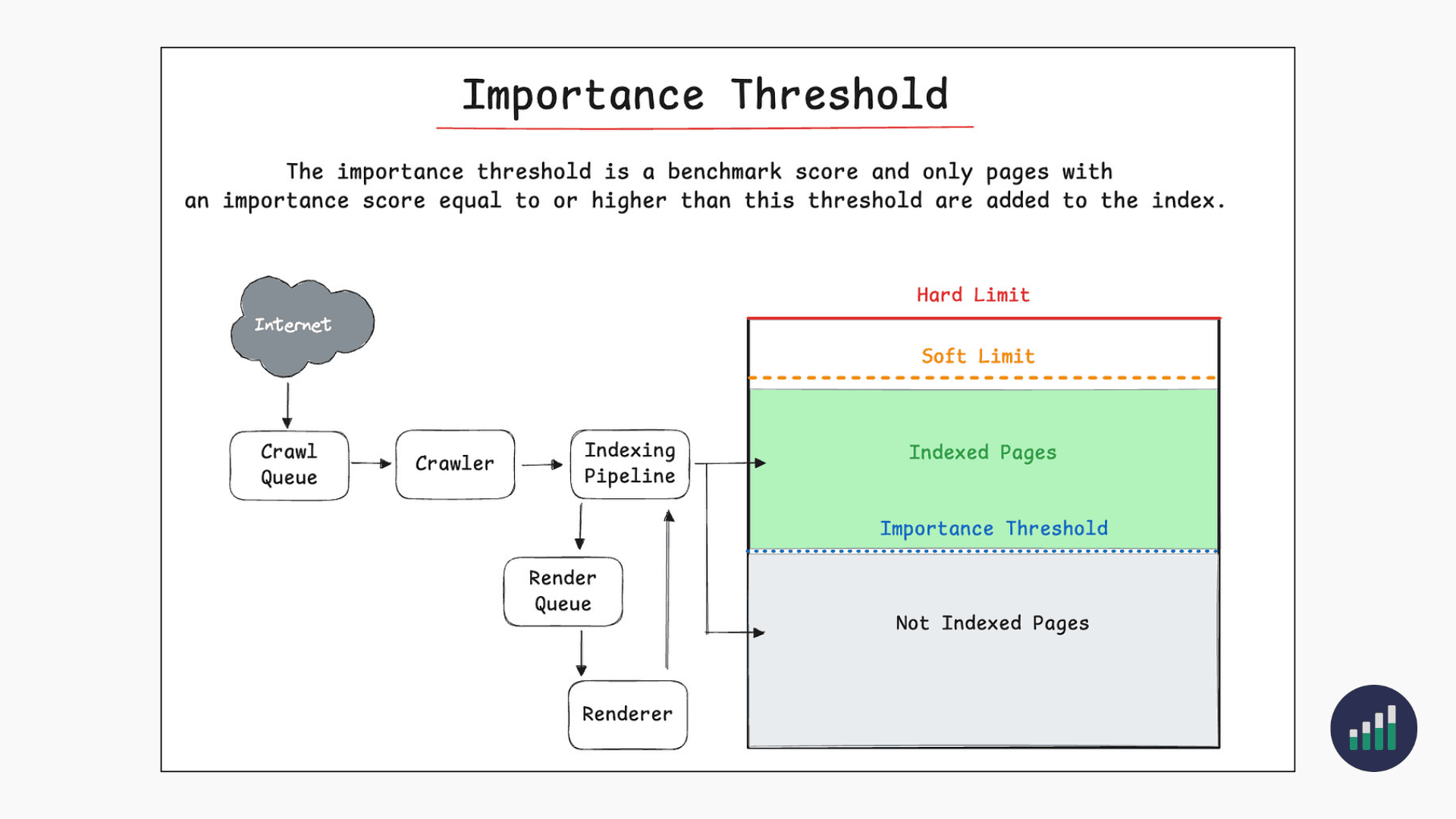
Bing does not have billions of searches per day to identify low-quality pages.
So, it's no surprise that pages actively removed by Google from its search results are being cited in Bing AI Answers. Bing's index does not have the same "magic" as Google to identify low-quality pages based on trillions of historic examples.
That is why Not Indexed pages can appear in Bing AI Performance report.
There are three ways that SEO professionals can action this data:
Combine your cited pages from Bing with Google indexing data.
This will help identify if cited pages in Bing AI Performance report are Not Indexed. And if cited pages in the report are Not Indexed in Google, you can use the index coverage states to help identify why they aren't indexed.
Index coverage states can help you understand what Google thinks of these pages.
If your cited pages show a status of 'Unknown to Google,' this is a strong indication (based on our data) that Google has either never indexed them or has since dropped them from its index.
It's important to understand which cited pages are Not Indexed in Google.
Google uses interaction data to identify and remove low-quality pages from its search results, so there may be something about your page that is triggering its removal.
If a page contains outdated or low-quality content, it's important to address it promptly. So that AI-powered tools like Bing Search, Copilot, and their partners don't surface irrelevant answers to users.
Many SEO professionals conduct content audits.
These content audits are designed to help identify low-quality pages that need to be deleted, noindexed or combined. However, a lot of this data is based on Google Search Analytics, Google Analytics 4, backlink data, and search volume data.
None of it takes into account pages being cited in Bing Search.
Moving forward, SEO professionals should be careful when deleting or removing both Indexed and Not Indexed pages from a website. As they could inadvertently cut off discovery pathways for AI search results.
Pages that are Not Indexed in Google can appear in Bing AI Answers.
Bing Webmaster Tools released a new AI Performance report in February 2025 that allows website owners to see which pages are being cited in Bing AI Answers.
At Indexing Insight, we found that a significant number of pages cited in the AI Performance report are Not Indexed in Google Search. In one example from our study we found that 49% of cited pages are Not Indexed in Google Search.
The primary reason these pages aren't indexed in Google is low page quality.
The reason for there are so many Not Indexed pages cited in Bing AI Answers comes down to scale. Google processes 14 billion searches per day, giving it a vast pool of user interaction data to identify and remove low-quality pages from its index.
Bing, with far fewer daily searches, doesn't have the same feedback loop to filter out low-quality content. Which means pages Google has actively removed can still appear in Bing's AI results.
Content and SEO audits can no longer focus solely on Google.
SEO teams need to take into account pages cited in Bing AI Answers to avoid inadvertently removing content that is actively being used in AI-generated responses.

Adam Gent
SEO Product Manager and Technical SEO. I’m currently an independent consultant who works with organisations to plan, scope and execute SEO projects that drive results.
