

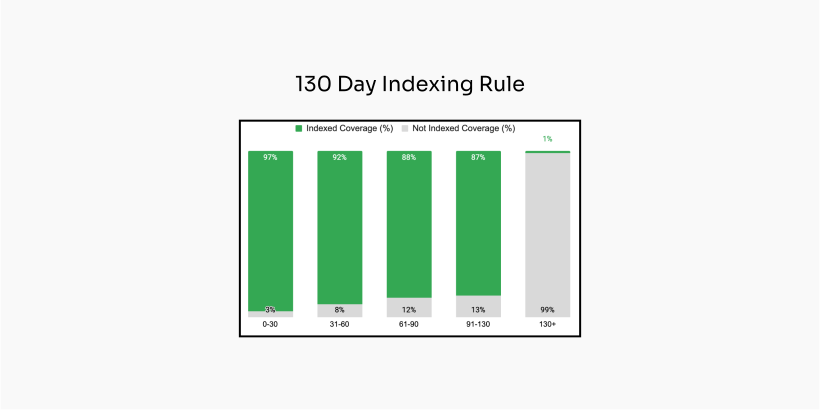
If an indexed page isn’t crawled in the last 130 days, it gets deindexed.
Pages are at risk of being deindexed if they have not been crawled in 130 days.
At Indexing Insight we track Days Since Last Crawl for every URL we monitor for over 1 million pages. And decided to run our own study to see if there is any truth to 130 day indexing rule.
Note: The 130 day indexing rule isn’t a new idea. A similar rule was identified by Jolle Lahr-Eigen and Behrend v. Hülsen who found that Googlebot had a 129 days cut off in its crawling behavior in a customer project in January 2024.
The indexing data pulled in this study is from Indexing Insight. Here are a few more things to keep in mind when looking at the results:
If a page has not been crawled in 130 days, it is removed from Google's Search results (changing from indexed to not indexed).
Our data from 1.4 million pages across multiple websites shows that if a page has not been crawled in the last 130 days then there is a 99% chance the page is Not Indexed.
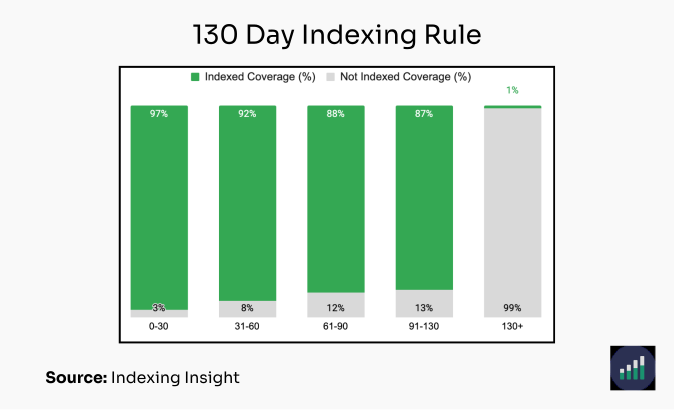
However, there are Not Indexed pages crawled in less than 130 days.
This means that the 130-day rule is not a hard rule but more of an indicator that your pages might be deindexed by Google.
The data does show that the longer it takes for Googlebot to crawl a page, the greater the chance that the page will be Not Indexed. But after 130 days, the number of Not Indexed pages jumps from around 10% to 99%.
We broke down the data into last crawl buckets between 100 - 200 days.
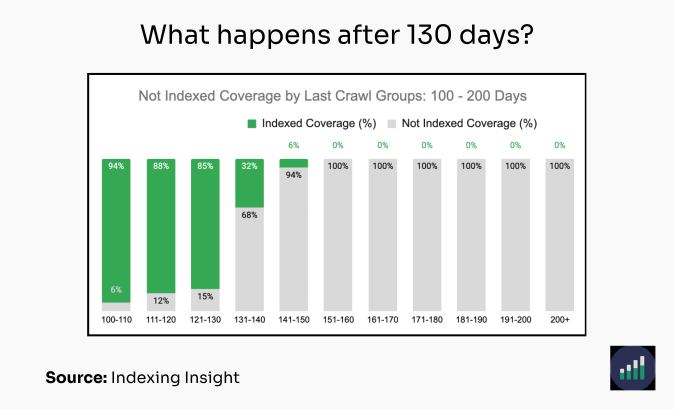
The data shows that between 100 - 130 days the index coverage is between 94% - 85%. But, after 131 days, the Not Index coverage shoots up.
The Not Indexed coverage state goes from 68% to 100% between 131 and 151 days. There are still pages indexed after 131 days, but the Index coverage reduces significantly between 131 - 150 days.
After 151 days, there are 0 indexed pages.
An Indexed page that is deindexed after 130 days is labelled as Not Indexed in Search Console.
To be more specific, when an indexed page is actively removed from Google Search (deindexed) its indexing state changes from 'submitted and indexed' to 'crawled - currently not indexed'.
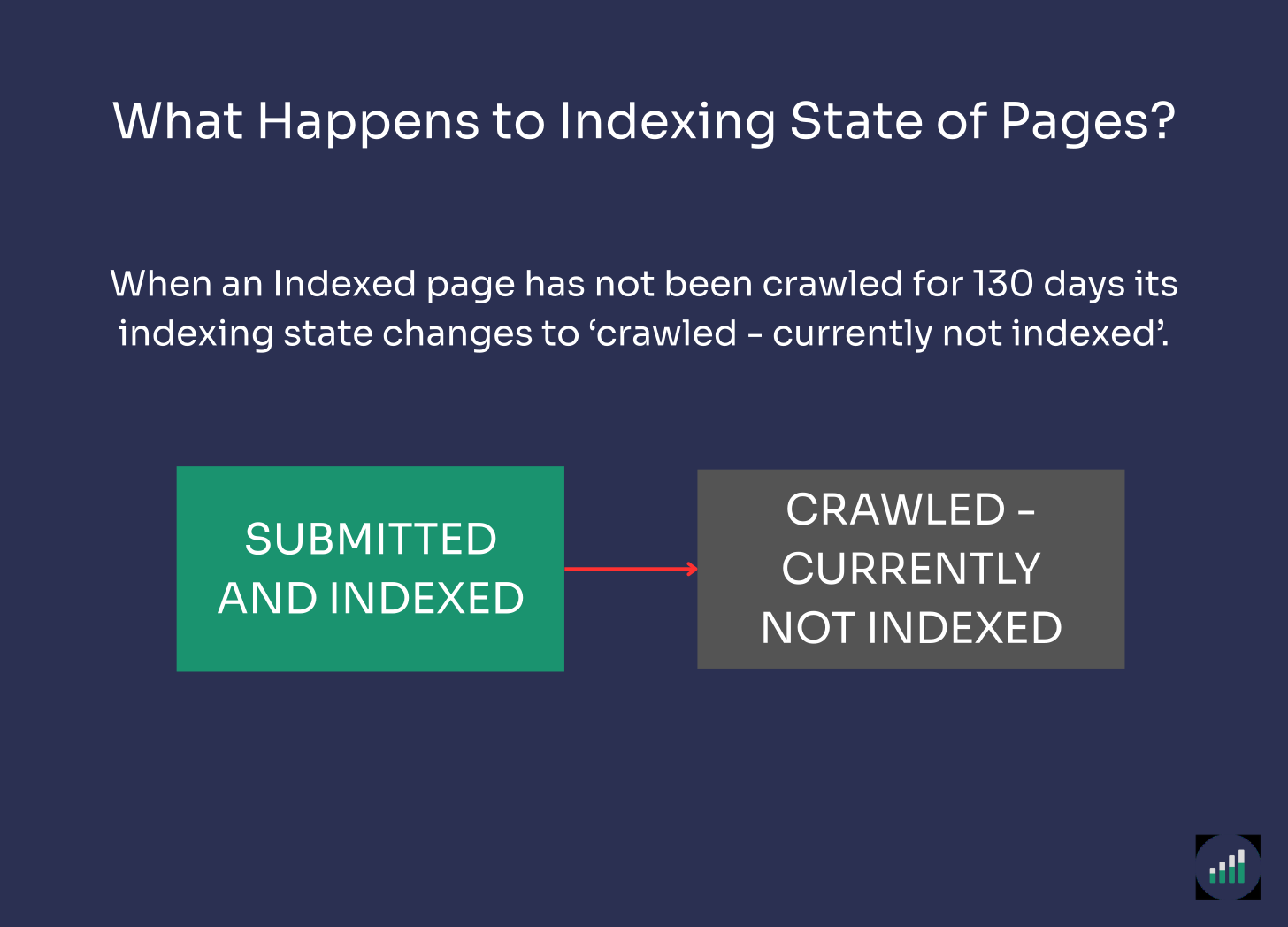
Our research at Indexing Insight has found that the official definition of 'crawled - currently not indexed' is misleading. It's not just new pages that are waiting to be indexed BUT indexed pages that have been actively removed from Google's search results.
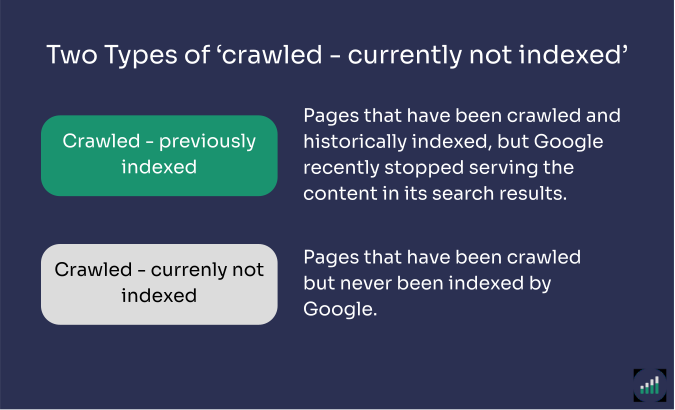
For more information, check out: What is 'crawled - currently not indexed'?
At Indexing Insight, we've integrated the 130-day indexing rule into our product.
Based on this research, the Indexing Insight team has created reports that help customers quickly identify pages not crawled in 130 days.
To view indexed pages not crawled in 130 days, go to the Crawl Coverage > 101 - 130 Days Report.
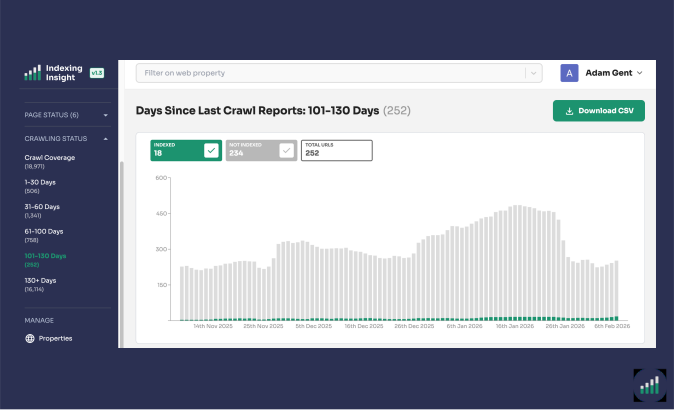
It's in this report that you can filter on Indexed pages, sort by Days Since Last Crawl, and see which are about to be deindexed by Google's index.
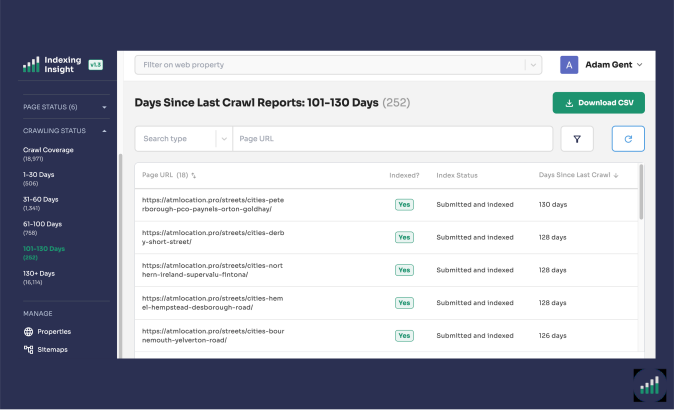
The 101-130 Day Report helps SEO teams prevent important pages from being deindexed. The Crawl Coverage reports are even part of our daily email alerts, so you stay on top of dexindexing issues in your inbox.
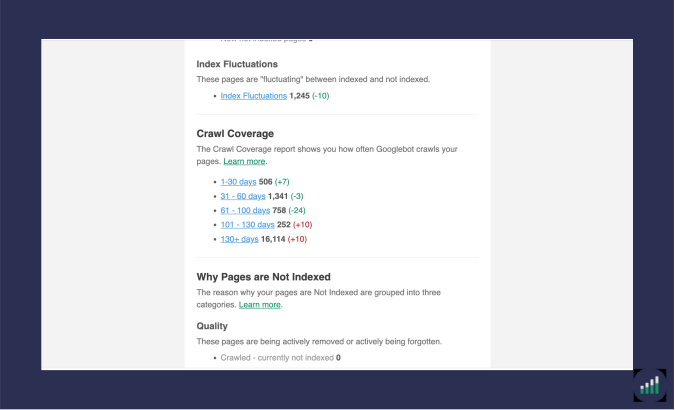
Check our pricing page to see which plans include Crawl Coverage reports.
The 130-day indexing rule is an indication that your pages will get deindexed.
However, it’s not a hard rule. There will be Not Indexed pages that can be crawled in the last 130 days. Based on the data, 2 rules stand out when it comes to tracking days since last crawl:
The longer it takes for Googlebot to crawl your pages (130+ days), the greater the chance the pages will be not indexed.

Adam Gent
SEO Product Manager and Technical SEO. I’m currently an independent consultant who works with organisations to plan, scope and execute SEO projects that drive results.
